

Part II: A Life Good Enough
By letting go of conditioned preferences, we nurture a sense of abundant enoughness.

Part Two of the three-part series on deepening the sense of belonging, awakening to more joy, and the gifts of letting go.
If you missed last week’s letter on belonging, you can read it here: For The Unbelonging Hearts.
Hello dear reader,
How are you this week? What remains in your hands when you let it go?

“This guy is good,” concluded the teacher during my recent monastery stay, referring to one of his students he had been telling me about. “Well, good enough,” he added.
We were sitting on the porch of his newly built kuti, accompanied by another monk. The teacher, the monastery’s abbot, had generously agreed to see me during his personal retreat, and that is why our conversation was taking place here, and not in the main building.
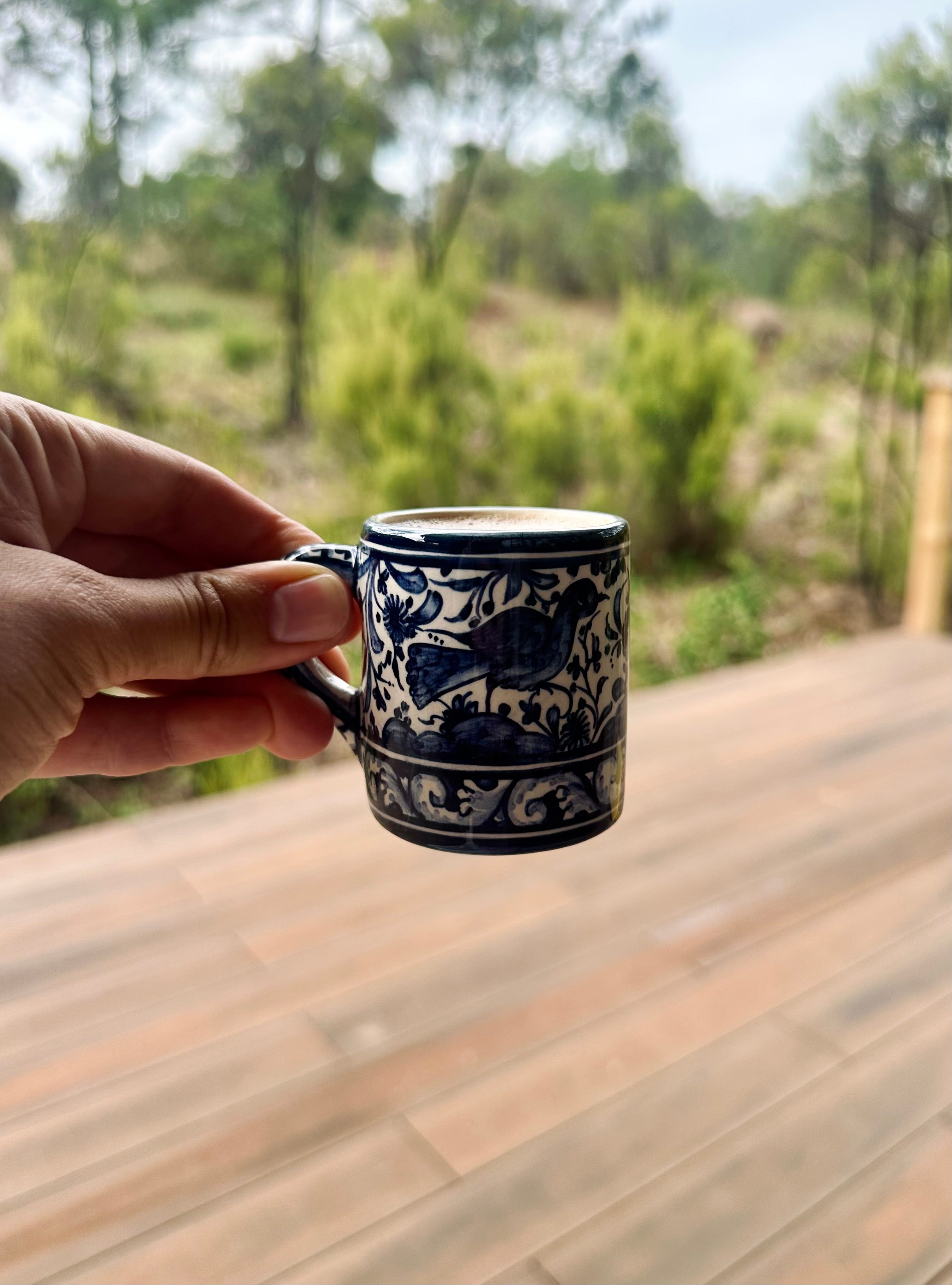
Surrounded by the silent crowd of old and young trees overgrown with lichen, immersed in birdsong and stroked gently by the wind carrying the ocean breeze from the coast, we had just finished drinking the tiny Turkish coffees he had offered, which I sipped in the tiniest of sips and very slowly, as I usually do not drink coffee at all, valuing too much the ability to sit still and not be moonshot in an instant.
I was then invited to view the kuti, which I found impressively well thought-out. It made the most of its humble size, with systems preventing damage from earthquakes, ant invasions, or mould growth from the region’s high humidity. It was, of course, beautifully located, held tightly in the greenery’s gracious hand, built of quality wood whose scent permeated the air, with large windows letting in lots of natural light, and overall highly aesthetically pleasing.
“It is a good enough house,” he remarked.

It was my third time staying at that monastery, with frequent, often daily, visits for the evening puja in between, when I still lived in the area. On these occasions, I had benefited from many conversations with this teacher and received invaluable guidance for the practice.
Nonetheless, I could never truly understand why he was so frugal with his words, granting the wide and wild array of experiences or observations a mere pat on the back, a mere “good enough.” Why not let them be great, or beautiful, or curious, or even astounding at times, when to many of us, students, they indeed appeared so—especially after our rushing minds slowed down and steadied, supported by meditation and the monastery’s tranquil atmosphere, more able now to truly notice?
“It is good enough,” he would say. “Good enough.”
In case you are wondering, I leave the teacher’s name out purposefully, according to his instruction. I was told that whenever I need to make a reference to the teachings I received or my practice there, it will be, well, good enough to simply mention the monastery, without naming him directly.
In this vein, my ways of being drifted into orbit around the lesson of enoughness simply by listening to him speak, hoping to one day understand it more fully—trusting the orbit would turn out to be a spiral. Without giving it much thought otherwise, it was to my surprise when I observed that during this August stay I slowly began to not so much understand—but feel and embody—what he was gesturing toward all this time.
A sense of sufficiency. A little smile. An undercurrent of quietude, satisfaction, fulfilment, born as it seems primarily out of simply being openly present and aware of the moment. Through emptying the mind, more space becomes available for a genuine kind of contentment with what is, without constantly chasing more, or better.
I found myself developing trust in the moment to be complete as it was, accepting it more wholly without seeking to make it something other than what was already offered to me naturally.
If I was tending to one of my tasks, such as wiping slowly the countless leaves of the many indoor plants in the monastery, or weeding the pathway outside, or washing up after the meal, or cooking for the entire monastic and lay sangha—or else, when I was walking slowly between the beautiful trees, sipping tea in the afternoon sun, listening to the wind chime, quietly meditating on a cushion—the same quality of sufficiency accompanied me, increasingly and unassumingly permeating all my actions, or lack thereof.
I understood that in striving to “make better use of my time,” chasing “more productive” or “more exciting” activities, I was continuously denying the potential of fulfilment in the multitude of mundane, everyday tasks which my days consisted of whether I liked it or not. Even when engaged in an exciting work project, or visiting a beautiful location, I still needed to complete many simple tasks that I often rushed through, or performed absentmindedly, reaching with attention and energy towards that which I believed was the rightful recipient of it.
It is one thing to read the teaching reminding us that washing dishes can be meditation, trying to exercise it when everything in us resists this very action. But it becomes something else altogether when we allow that state of respect towards the moment to come naturally upon us, as a result of the practice. One day, without even trying, we might recognise that whatever we do, in any given moment, is a gift of life.
As best put by Thích Nhất Hạnh:
“If while washing dishes, we think only of the cup of tea that awaits us, thus hurrying to get the dishes out of the way as if they were a nuisance, then we are not ‘washing the dishes to wash the dishes.’ What’s more, we are not alive during the time we are washing the dishes. In fact we are completely incapable of realizing the miracle of life while standing at the sink. If we can’t wash the dishes, the chances are we won’t be able to drink our tea either. While drinking the cup of tea, we will only be thinking of other things, barely aware of the cup in our hands. Thus we are sucked away into the future—and we are incapable of actually living one minute of life.”
A task is fulfilled in and of itself when we learn to no longer see it as a means to something better—cleaning the home as the means to a more pleasurable living space, cooking as the means to a full stomach, crossing off the tasks on the to-do list as the means to “finally getting it done”—but as the purpose unto itself. A self-fulfilling ritual. Cleaning for the sake of cleaning, cooking for the sake of cooking, tending to the many listed tasks individually, with respect and kindness for each. Slowly, we develop the capacity to gladly live each moment as it is.
Allowing oneself to rest in the gentle contentment of enoughness does not mean ceasing to strive altogether. In a way, we are always striving. Even working to secure food, sustain a home, or meet other fundamental needs is striving. That is a wholesome kind, which leads us to improve the conditions of our lives, develop our personal capabilities, be good friends, partners, neighbours, stewards of the natural world, and finally—take the first step on the path of inwardness, and not make it the last one.
But as we all know, there is also the kind of striving—and the line can be insidiously thin at times—which ultimately only serves our individual goals, feeding and fortifying the attachment to the conditions from which our sense of self arises, and through it, commodified separateness.
The sense of enoughness, then, rests not so much on striving per se, as on the quality of this effort. When we endeavour into the world from a place of sufficiency, we exercise trust in life. We trust that we will be met with enough. We find comfort in our own resourcefulness, the kindness of others, the abundance of the Earth.
In some circles, this is referred to as the “abundance mindset,” but I find this term to be a little troublesome. If not well rooted, it can too easily slip into the kind of accumulative, self-serving striving which only focuses on “more” and “better,” rarely allowing us to simply rest in what is, and let that be enough.
Striving rooted in enoughness deepens our sense of safety, while striving stemming from a sense of lack armours anxiety.
The time had come in recent months to dedicate effort to dissolving, healing and re-patterning a scarcity mindset which had overtaken my ways after years of health struggles and, stemming from them, financial and housing challenges.
This work revolved mainly around learning to trust life, opening my heart to let more love pass through unencumbered, setting wiser boundaries, releasing the hold of worn-out identities while cultivating mindfulness over the formation of new and subtler ones, and releasing deeply stored fears. The core part of it, however, was learning how to receive.
“Just stretch your arms out, like a child, and simply ask. Trust that you are being heard, and that you will receive. Trust that you are not meant to be deprived of what you need,” repeated my good friend and mentor over and over again. So I kept stretching my arms out in prayer. I let myself be like a little girl. Permission was granted, begrudgingly and fearfully, to admit I needed help—that I could not, and did not want to, keep trying to do it all on my own anymore.
It was steady work. Day by day. No spectacular transformation occurred overnight. With time and practice, however, I became more at ease with receiving. Unsurprisingly, that was when life ripened and into my open hands spilled the seeds of support, gifts in manifold expressions.
The freedom is in knowing I could let go and still be okay. Empty hands mean I can finally receive. I needed to let go of the idea of how “my life ought to be” and instead learn to open up to its innate, spontaneous abundance. To recognise that in each moment, I am met with enough. And if I am not—that is where the wholesome kind of striving can help me adjust it.
“If at the end of each day you can say ‘I had enough today’ and actually bring that into consciousness at least for a little while as you are getting ready for bed or falling asleep, you will feel fulfilled,” instructed the teacher. “Today I had enough to eat, the clothes I wore served me well, I have a safe place to sleep in, the rain is not raining on my head, my health is okay.”
He told me to make this reflection a part of everyday evening ritual, alongside dedicating “whatever good I have done today” to all living beings, with gratitude for all the help I have received today and through my life. A life good enough is rooted in reciprocity.
He then said, anticipating my question, that when I worry what tomorrow will bring, I can simply accept that I cannot actually know. The practice is in trusting that I will deal with it tomorrow—when it comes—because I can. “You can still worry during the day about all the other things that do not seem sufficient if you need to; yet you can still, at the end of the day, recognise that today you had enough.”
Today, as many of us feel the strata of uncertainty pressing upon us—arising rapidly and mercilessly from concerns that, in much of the Global North, had long seemed distant, such as the erosion of international safety, deepening economic instability, the worsening state of the natural world, and fraying collective coherence—the need to restore a deep-rooted sense of resourcefulness and centred contentment feels increasingly paramount.
If our sense of wellbeing is satisfactory, even while external circumstances may not always be so, we are much better equipped to face the unknown. Dwelling in the gentle and unassuming—but highly potent and sustainable—sense of enoughness, we are less prone to seek escapism, hoard and exploit for a sense of safety, or radicalise politically and socially.
The sister counterpart of enoughness, or okayness, is equanimity: the ability to step back from the situation we are facing, to see the bigger picture, understand its nature, and discern where to direct our energy. With equanimity, we exhaust less of ourselves in reactive habits, and instead learn to respond with wisdom and deepened calm—even when strong emotions surge at the surface.
Equanimity allows us to take life a little less personally, holding the bigger picture in mind. When our grip on identification is loosened even slightly, life has more room to move through us freely, fresh each moment, carrying gifts.
“A great longing is upon us, to live again in a world made of gifts,” noted Robin Wall Kimmerer in Braiding Sweetgrass. And later she added, “When all the world is a gift in motion, how wealthy we become.” The key to contentment is not found in seeking more, but in developing the capacity to be content with less, letting it come and go without clinging too strongly or seeking to find a belonging bound up in identity. To recognise a touch of air caressing our nostrils as a gift. To delight in a smile offered by a loved one or a stranger alike. To say, as I was instructed to bring into my consciousness each evening: “Today, I might have worried—but today I had enough.”
Cultivating a sense of enoughness is not so much an exercise in finding joy in little things, as it is a deepening into a recognition that no thing is too little to contain in itself an ocean of joy. It is the respect we grant each moment in equal measure, regardless of our moods or conditioned preferences, understanding that the gift of life is not in fulfilling our wishes—but in fulfilling our existence.
“What training in insight is about is learning to let go of the way things appear to be, to stop merely believing and see that which is true. When we see accurately, we arrive at a true appreciation of whatever there is in front of us, be it our teachers, our moods or anything else. We won’t have to be driven by conditioned liking and disliking, and that means we won’t get stuck.”
—teaches Ajahn Munindo in “Alert to the Needs of the Journey”
Spontaneous appreciation for what is, arising from a purified mind, enables us to finally arrive with each step. When we fully land in every moment, we no longer feel so hungry for what may lie beyond it. Slowly, we become satisfied with the very state of being present. In the light of our generous awareness, life’s gifts gleam in abundance. That is good enough.

If you find warmth, comfort, inspiration, joy, motivation, or anything else of value in these letters and would like to show your support, please consider becoming a deeply valued patron by upgrading to a monthly or yearly subscription. This will also give you access to the special, paid-only letters. If you have a financial restriction, please don’t hesitate to contact me.

Before you go:
A gentle prompt to aid you in this week’s reflection:
How might you let this present moment, right now, be enough?


This feels really good today. I am going through a week that is bringing up very necessary thoughts about the need to prioritize (again) recentermyself, consumed less, think less. When I think about the world pace it just does not make sense. It is absolutely not sustainable. In fact, we are not feeling sustained or supported. I intentionally decided not to do anything several times this week. My mind needed a total shut down. My heart needed to listen to wind and birds. Good enough is absolutely enough when we step back into the role of being human, striving for a human pace. This is the ultimate gift. And honestly, I need nothing else. I am thinking that many feel the same. Thank you Justyna. I love hearing about your experiences. xo
Usually I read your writings in the mornings, afternoons... With a fresh eye ~ mind ~ heart...
This time I read it in the evening, because I needed your help to calm down before going to sleep...
And the words knew ;)
“Today, I might have worried—but today I had enough.”
Good enough day
Good enough night